About the project
An open, blinded benchmark from McMaster University
Developed by Dr. Phillip Kollmeyer's battery research group in the Department of Electrical and Computer Engineering so that state-of-charge estimation methods can finally be compared on equal terms — and to give students and industry a public, credible place to prove their algorithms.
Why a blind modelling tool
Other fields have long relied on independent, comparative evaluation: the NIST Face Recognition Vendor Test or the PEER blind prediction contests in structural engineering. Battery state estimation had nothing equivalent — every paper used its own cells, cycles and metrics, and the author's effort on each baseline could unintentionally skew a comparison. This platform provides the dataset, the blinded test cases and the evaluator so that a lower number really does mean a better algorithm.
The lab
The benchmark is run by Dr. Phillip Kollmeyer's battery research group in the Department of Electrical and Computer Engineering at McMaster University (Hamilton, Ontario). The group works on battery modelling, state estimation and testing for electrified transportation. All data on this site was collected on an Arbin LBT cycler inside an Envirotronics SH16 thermal chamber.
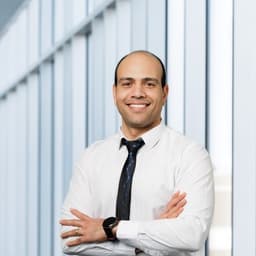
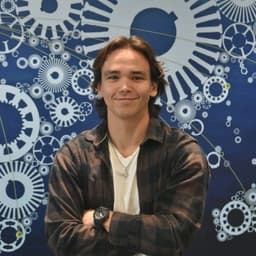
People

Dr. Phillip J. Kollmeyer
Assistant Professor, Electrical and Computer Engineering · project lead

Ahmad Ali
MASc student · platform development and evaluation infrastructure

Ahnaf Akif Rahman
PhD candidate · SOC estimation models and evaluation
Paarth Kadakia
Software intern

Aidan McLean
Software intern
Past contributors

Funding & acknowledgement
This work was supported by Canada's Natural Sciences and Engineering Research Council (NSERC) Discovery Grant RGPIN-2024-06796. We also acknowledge the support of McMaster University and thank the researchers who ran the multi-month test campaign behind the dataset.
Nous remercions le Conseil de recherches en sciences naturelles et en génie du Canada (CRSNG) de son soutien.

